
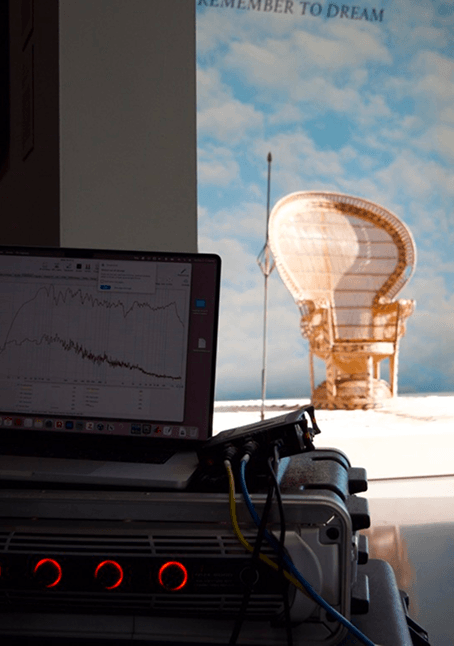
Many people imagine museums as quiet spaces, rooms where you can slow down to notice each brushstroke on a painting or stretch your mind around a stunning
abstract piece.
In reality, museums are rarely silent. Even in the calmest galleries, you’ll hear footsteps, whispers, ventilation systems, a tour guide, and sometimes noise from outside.
As museums welcome more visitors, the sounds they create have become a larger part of the experience. Exhibitions are evolving, and interactive, multi-sensory artworks increasingly invite conversation, movement, and reflective group activities. Today’s museums often need to support two different experiences at once:
- Clear speech during tours, classes, and public programs
- A sense of calm and personal space for visitors who want to reflect quietly
Finding the Right Sound is a Balancing Act
This creates a real design challenge: how can we balance speech intelligibility and privacy? Speech intelligibility is the ability to understand someone clearly, while speech privacy aims to obscure conversations enough to preserve a sense of privacy in a space. While intelligibility may seem preferable, not every conversation in a museum is meant to be understood.
Striking the right balance between intelligibility and privacy depends on the function and design of each space. These ideas are explored in depth in an earlier article by Ioana Pieleanu, who shares an acoustician’s perspective on achieving effective speech intelligibility and privacy in corporate offices and commercial environments.
Weighing Out the Various Solutions
One practical way to address this challenge is by choosing finishing materials that shape how sound behaves in a room. Materials don’t just affect how a space looks; they influence how sound bounces, spreads, and fades. Traditionally, many finish choices have been made solely for appearance. But material options have expanded significantly in recent years, especially those with acoustical properties.
For example, some museums can maintain rooms similar to classic “white-box” galleries while absorbing more sound, helping reduce overall noise and distraction. While acoustically beneficial materials alone won’t solve every issue, they can play an important role as museums continue to evolve and display new art forms and mediums with their own unique acoustical requirements.
Museum Acoustics: An Introduction to the Study
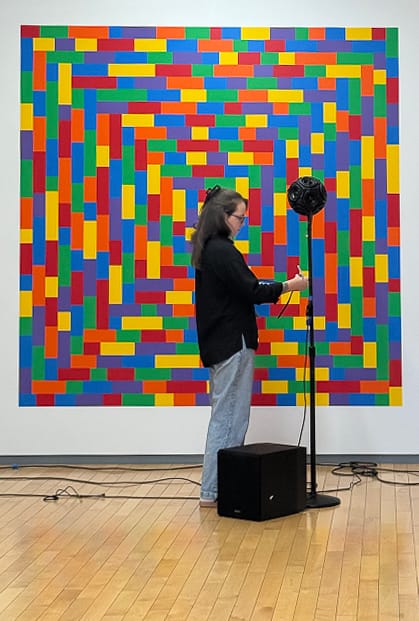
Over the past few years, I have conducted two studies examining how different finishing materials and room layouts/designs affect acoustic metrics, human perception, and physiological responses in museum spaces.
This work draws on acoustic measurements and listening studies from five museums:
• Williams College Museum of Art (Williamstown, MA)
• CCS Bard Hessel Museum (Annandale-on-Hudson, NY)
• Massachusetts Museum of Contemporary Art (MASS MoCA) (North Adams, MA)
• University Art Museum (Albany, NY)
• Museum of Fine Arts (MFA Boston) (Boston, MA)
(Photography by Aleksandr Tsurupa)
Study 1: What the Numbers Predict
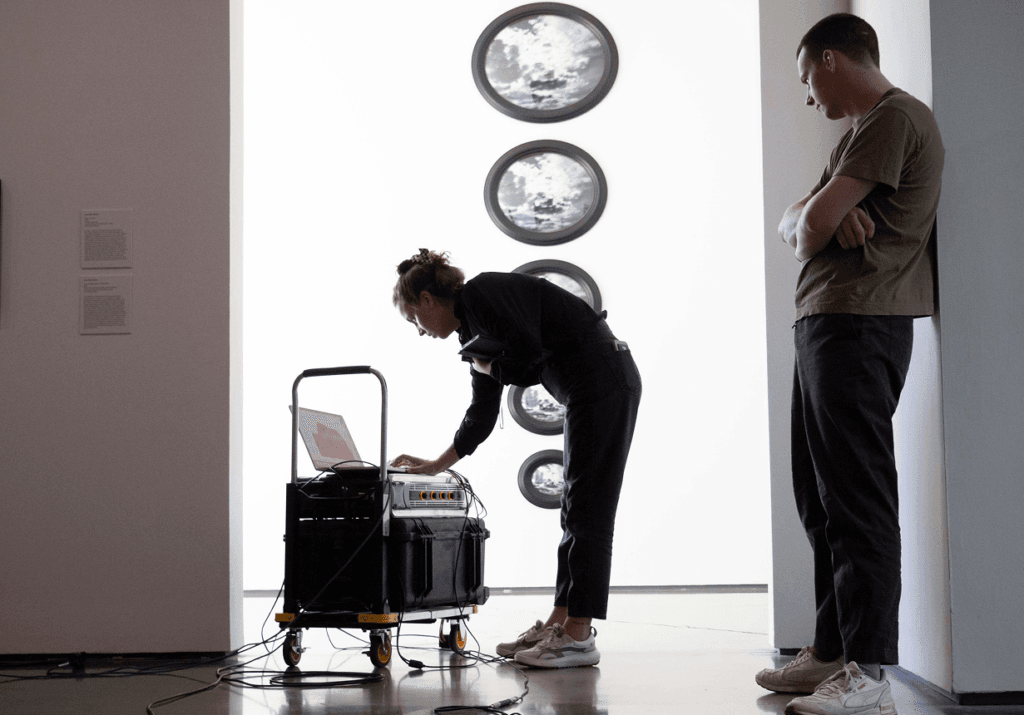
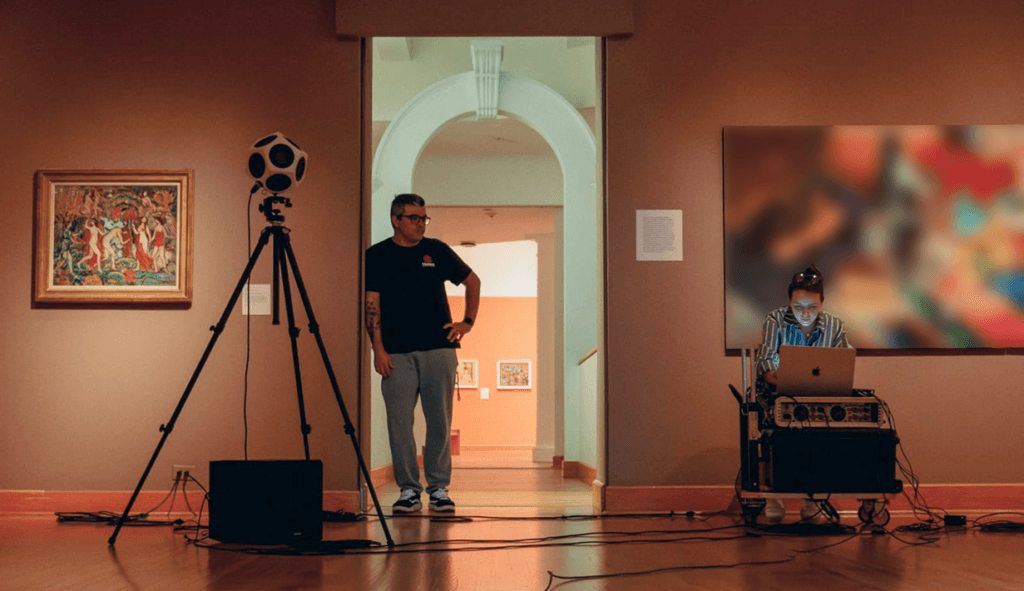
Two complementary methods can help us understand how different materials shape a room’s acoustic environment: measuring the room directly and using computer simulations. In this case, we used both approaches. First, we measured the acoustics of 54 museum rooms. We then created a 3D model of each space and placed virtual sound sources and listeners throughout the room. Using the measured data, we calibrated the models so they could reproduce each room’s unique acoustic fingerprint, known as its room impulse response.
From this acoustic fingerprint, we can analyze measures that describe how the room sounds, including reverberation time, how clearly speech can be understood, and how quickly conversations fade with distance.
For this study, we tested three levels of sound absorption (low, medium, and high) on the floors, ceilings, and walls of 54 museum rooms. We could then not only compare the predicted acoustic results, but also listen to how each design option would sound applied to a room through a process called auralization. You’ll have the opportunity to listen to these examples at the end of the article.
Click below to view the predictions:
Across all surfaces, increasing absorption from low to medium to high produced improvements: it reduced reverberation, improved speech clarity, and made speech drop off faster, supporting privacy.
1. Highly reflective floors, like concrete, performed the worst. Switching materials to wood or carpet improved the space, but floors alone did not guarantee “ideal” results. In many cases, ceiling and/or wall treatments were still needed to achieve strong clarity and privacy.
2. Ceilings produced the most significant overall improvement in speech clarity and helped reduce the distance traveled by distracting sounds. In other words, opting for more absorptive ceiling finishes can be a compelling way to improve tour experiences.
3. Walls emerged as the strongest privacy tool. High-absorption wall finishes produced the steepest drop-off in conversation levels with distance. This is especially useful for galleries that aim to feel whisper-quiet or include multimedia-based artwork.
Study 2: Emotions and Bodily Responses
Ceilings are often the largest uninterrupted surface in gallery rooms and one of the easiest places to add absorption without affecting display space. Continuing from Study 1, we focused on three ceiling material options and tested how they influenced:
- Visitors’ perceived balance between understanding the tour guide and avoiding distraction from background conversations
- Overall preference and satisfaction
- Physiological responses related to arousal or stress: skin conductance (EDA) and heart rate (HR)
- (Skin conductance measures increased moisture on participants’ hands caused by physiological arousal, stress, or emotional stimuli)
We designed a realistic museum scene: a visitor listening to a nearby tour guide while two other visitors talked in the background. Participants experienced three versions of the same scene, with only the ceiling material changing (from low, to medium, and to high absorption). After each version, participants rated how clearly they could hear the guide, how distracting the background conversation felt, and which environment they preferred. We also recorded EDA and HR to determine whether different sound environments were associated with calmer or more activated responses.
To keep comparisons fair and controlled, we used acoustic measurements from real spaces to calibrate a virtual model, then presented the scenarios in an immersive listening environment (Acentechs 3DListening Room).
The Story the Numbers Tell
Overall, the high-absorption ceiling produced the most favorable responses for the museum scenario. Participants reported:
- Less distraction and interference from background conversations
- A clearer understanding of the tour guide
- Higher satisfaction and preference compared to the lower-absorption ceilings
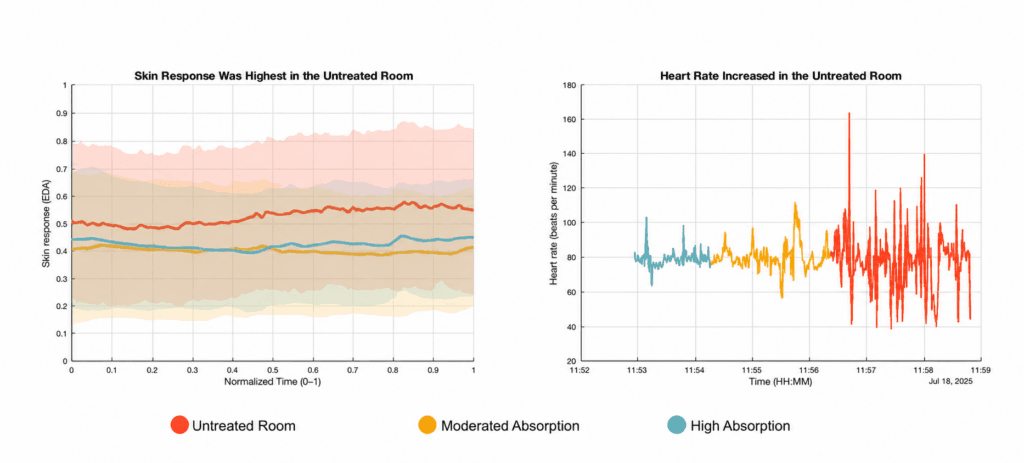
One seemingly negative, yet ultimately positive, aspect of the high-absorption ceiling was that it made background conversations more understandable. Despite this, participants still described the condition as the least distracting overall, likely because the room felt quieter and less “noisy” in general. We also saw differences in physiological responses across the three conditions reflected in changes in EDA and HR. The graphs below show one example participant. Measurements for both skin response and heart rate were higher in the untreated room (orange-red), which had the lowest sound absorption. These measurements add another layer of evidence beyond surveys, by showing how the body can react automatically to background sounds in ways we don’t intentionally control.
Interactive Listening Auralization (Web3DL)
Now it’s your turn to experience the gallery through sound and hear how different finish materials can shape the overall visitor experience.
Imagine that you are standing in the Koch Gallery at the Museum of Fine Arts in Boston. A tour guide is speaking nearby, while three visitors are having an unrelated conversation in the background. Use the Room Finishes panel to change the materials, then listen for how each option affects:
- how clearly you can understand the tour guide
- how much of the background conversation you can hear
Which scenario do you think creates the best balance between clear nearby speech and privacy for conversations farther away?
What’s in it for You?
Museums today are asked to do more than ever: support learning, social connection, and reflection (sometimes all in the same gallery). Our results suggest that material choices can meaningfully improve visitor experience without sacrificing the clean, spacious visual experience museums strive to achieve in their galleries.